



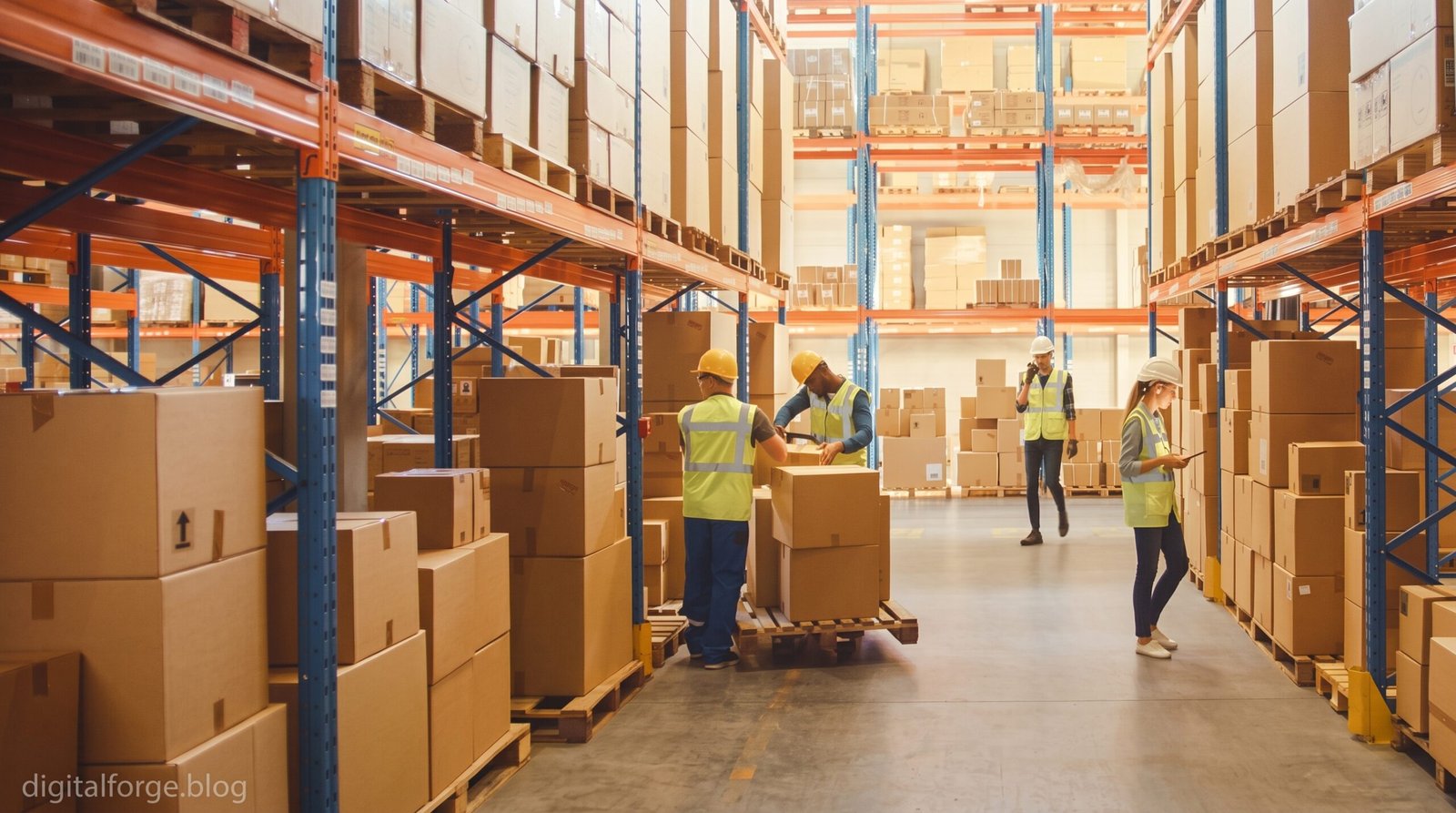
Logistics is an essential part of everyday life and modern business, even though most customers rarely notice everything that happens behind a successful delivery. Whenever raw materials are transported to a factory, products are stored in a warehouse, an order is prepared for shipment, or a package reaches a customer’s door, logistics is involved. It creates the connection between where products originate and where they are ultimately needed. Without effective logistics, businesses would struggle to maintain inventory, complete orders, control transportation, and provide reliable customer service.
In simple terms, logistics means planning and managing the movement, storage, handling, and flow of goods, materials, resources, and related information. Logistics management makes sure that products are available at the appropriate location and time while organizations attempt to use transportation, warehouse space, labor, inventory, and other resources efficiently. The concept applies to almost every industry, including manufacturing, retail, e-commerce, healthcare, food distribution, construction, agriculture, technology hardware, and international trade.
The modern meaning of logistics is much broader than shipping. It involves transportation management, warehousing, inventory control, order fulfillment, packaging, material handling, distribution, shipment tracking, logistics planning, and reverse logistics. As businesses have become more connected and customers have developed higher expectations for product availability and delivery, logistics has become a major strategic function rather than simply an operational activity.
What Is Logistics?
what is logistics the process of planning, implementing, and controlling the efficient movement and storage of goods, materials, resources, and related information from an origin to a destination. The Council of Supply Chain Management Professionals describes logistics management as the part of supply chain management concerned with the efficient forward and reverse flow and storage of goods, services, and related information between the point of origin and the point of consumption. This definition highlights an important fact: logistics involves both physical movement and information management.
For businesses, logistics can begin before a product reaches a company and continue after the product has been delivered to a customer. A manufacturer may need to coordinate incoming raw materials, store components, move materials into production, transfer finished goods to a warehouse, and arrange distribution to customers. An online retailer may need to receive inventory, organize it inside a fulfillment center, process customer orders, pick and pack products, arrange delivery, and manage returns.
Logistics also involves making decisions about timing, location, quantity, transportation methods, storage requirements, handling procedures, and delivery arrangements. The goal is not simply to move something from point A to point B. A successful logistics operation attempts to make the entire flow reliable, efficient, cost-conscious, and responsive to customer requirements.
Why Is Logistics Important for Businesses?
Logistics is important because businesses depend on the reliable availability and movement of products and materials. A manufacturing company cannot continue production if essential components do not arrive on time. A retailer cannot satisfy customers if popular products are unavailable. An e-commerce company cannot maintain a positive customer experience if orders are consistently processed incorrectly or delivered late. Logistics provides the processes needed to coordinate these activities.
One of the major reasons logistics matters is cost management. Transportation, warehousing, labor, packaging, inventory, equipment, and order fulfillment all contribute to operating expenses. Inefficient logistics can increase these costs through unnecessary transportation, excessive inventory, inefficient warehouse layouts, repeated handling, poor route planning, and delivery problems. Well-organized logistics can help businesses make more effective use of available resources.
Logistics is also directly connected to customer satisfaction. Customers generally expect products to be available, orders to be accurate, deliveries to arrive within the promised timeframe, and shipment information to be accessible. When logistics performs well, customers may barely notice it because everything works as expected. When logistics fails, however, delays, stockouts, damaged products, incorrect shipments, and returns can quickly become visible to customers.
How Does the Logistics Process Work?
A logistics process generally begins when a business identifies a requirement to obtain, move, store, or deliver a product or material. The organization must determine what is needed, where the item is located, where it needs to go, how much is required, and when it should arrive. Logistics professionals then coordinate transportation, inventory, storage, handling, packaging, documentation, and delivery.
Consider the journey of a product manufactured for retail sale. Raw materials may first arrive from suppliers and enter an organization’s inbound logistics network. The materials are received and stored before being moved into production. Once manufacturing is complete, finished products may be transported to a distribution center or warehouse. Orders are then processed, products are picked and packed, shipments are prepared, and carriers transport the goods toward retailers or final customers.
Information moves alongside the physical product throughout this process. Businesses need to know what inventory is available, where products are stored, which orders have been received, what shipments are in transit, and when deliveries are expected. Modern logistics systems use digital information to provide greater visibility into these activities, helping organizations coordinate different parts of the logistics network and respond to changing conditions.
What Are the Main Functions of Logistics?
Logistics includes several major functions that work together to support the movement and storage of resources. Transportation is responsible for moving goods between locations, while warehousing provides places where products can be received, stored, organized, and prepared for distribution. Inventory management focuses on maintaining appropriate stock levels and ensuring that products can be found when they are required.
Order fulfillment is another important logistics function. It begins when an order is received and continues through inventory allocation, picking, packing, shipment preparation, transportation, and delivery. Material handling involves the physical movement of goods inside facilities, while packaging helps protect products and prepare them for transportation and storage.
Logistics can also involve fleet management, carrier coordination, shipment tracking, distribution planning, logistics network design, demand and supply planning, and third-party logistics services. Because these functions influence one another, logistics management requires coordination across the entire operation rather than focusing on a single activity in isolation.
What Are the Different Types of Logistics?
Inbound logistics generally focuses on the movement of goods and materials into a business or production operation. This can include transporting raw materials from suppliers, receiving shipments, unloading products, inspecting materials, storing inventory, and moving components toward manufacturing or other internal processes. Efficient inbound logistics helps ensure that operations have the resources they need when they are required.
Outbound logistics focuses on moving finished products away from a business, warehouse, or distribution center toward retailers, businesses, or final customers. It can include order processing, inventory allocation, picking, packing, transportation scheduling, shipment tracking, and final delivery. Outbound logistics is particularly important in retail and e-commerce because fulfillment speed and accuracy can strongly affect customer satisfaction.
Reverse logistics manages the movement of products back through the supply chain. Customer returns, repairs, recycling, refurbishment, recalls, and product recovery can all require reverse logistics. This means modern logistics is not limited to one-way movement from manufacturer to customer. Products can travel in multiple directions depending on business requirements and what happens after an initial sale.
How Does Transportation Fit Into Logistics?
Transportation is one of the most visible parts of logistics because it physically moves products from one location to another. Companies can use road, rail, air, ocean, or combinations of transportation modes depending on factors such as distance, product characteristics, urgency, shipment volume, available capacity, reliability, and cost.
Transportation logistics involves much more than choosing a vehicle. Businesses may need to plan routes, schedule pickups and deliveries, select carriers, consolidate shipments, manage loads, monitor transportation performance, track shipments, and respond to delays. A transportation decision can also affect inventory and warehousing because delivery speed influences how much stock may need to be held and where it should be positioned.
For international logistics, transportation can become even more complex because shipments may cross borders and require customs procedures, documentation, what is logistics, and coordination among multiple transportation providers. Global logistics therefore requires careful planning and visibility because a delay at one stage can affect many other stages of the supply chain.
How Does Warehousing Support Logistics?
Warehousing is a critical part of logistics because products often cannot move directly from their source to their final customer. Warehouses and distribution centers provide locations where inventory can be received, stored, organized, sorted, consolidated, picked, packed, and prepared for shipment. They help businesses position products closer to markets and customers while maintaining control over inventory.
Warehouse logistics includes receiving products, what is logistics, placing items into appropriate storage locations, monitoring stock, picking products for orders, packing shipments, staging outbound orders, and coordinating transportation. Efficient warehouse design can reduce unnecessary movement and help employees locate and process products more quickly.
Technology has transformed modern warehouse operations. Warehouse management systems can provide information about inventory locations and support receiving, picking, packing, and shipping activities. Larger facilities may also use automation, what is logistics scanning systems, robotics, conveyor systems, and other technologies to increase operational efficiency and improve inventory accuracy.
What Is the Difference Between Logistics and Supply Chain Management?
what is logistics and supply chain management are closely related terms, but they describe different scopes of activity. Logistics focuses primarily on the movement, storage, handling, and associated information related to goods and resources. Supply chain management covers a broader network that includes sourcing, procurement, production, supplier relationships, logistics, demand management, and coordination among supply chain partners.
A supply chain can involve suppliers providing raw materials, what is logistics manufacturers producing goods, logistics providers transporting and storing products, distributors managing regional inventory, retailers selling products, and customers purchasing and using them. Logistics connects many of these stages by managing how goods move and where they are stored.
This distinction is useful because logistics can be considered an important component of supply chain management. A supply chain manager may make decisions about sourcing strategy and supplier relationships, while logistics professionals may concentrate more directly on transportation, what is logistics, inventory movement, order fulfillment, and distribution. In practice, however, these responsibilities can overlap, especially in smaller organizations.
How Is Technology Changing Logistics?
Technology has become one of the most important forces shaping modern logistics. Businesses use digital systems to manage inventory, what is logistics, monitor warehouse operations, process orders, track shipments, and analyze logistics performance. These tools can provide businesses with more timely information and greater visibility into what is happening throughout their logistics networks.
Transportation management systems can support route planning, shipment scheduling, carrier coordination, and transportation analysis. Warehouse management systems can help organizations control inventory locations and warehouse activities. GPS and tracking technologies can provide information about shipment and vehicle locations, while barcode and scanning technologies can improve inventory identification and order accuracy.
Artificial intelligence, machine learning, automation, and data analytics are also becoming increasingly important in logistics. Businesses can use data to forecast demand, what is logistics, improve transportation planning, and anticipate potential problems. Automation can support repetitive warehouse activities and help businesses process large numbers of orders. These technologies do not eliminate the importance of logistics professionals; instead, they give them better information and tools for making operational decisions.
What Are the Benefits of Effective Logistics Management?
Effective logistics management can improve the way a business uses transportation, warehouse space, inventory, what is logistics, technology, and other resources. When these elements are properly coordinated, organizations may reduce unnecessary movement, improve inventory visibility, increase order accuracy, and make deliveries more reliable.
Inventory management is particularly important because businesses need to balance product availability with the costs associated with holding stock. what is logistics Too much inventory can occupy warehouse space and tie up capital, while insufficient inventory can result in stockouts and missed sales. Logistics planning helps businesses determine where inventory should be positioned and how it should move through the network.
Effective logistics can also strengthen customer service. what is logistics Reliable order fulfillment, accurate shipment information, appropriate packaging, and dependable delivery can create a smoother customer experience. For companies operating in competitive markets, logistics performance can therefore become an important part of their overall business strategy.
What Challenges Do Modern Logistics Operations Face?
Modern logistics networks face many challenges because businesses must coordinate multiple activities across different locations. what is logistics Transportation delays, fluctuating demand, what is logistics, inventory imbalances, warehouse constraints, labor shortages, fuel costs, damaged goods, inaccurate information, and unexpected disruptions can all affect logistics performance.
Global logistics can present additional challenges because international shipments may involve different regulations, customs requirements, currencies, transportation systems, and business environments. A disruption in one location can sometimes create consequences across an entire network. what is logistics This makes visibility, contingency planning, communication, and flexibility increasingly important.
Businesses also need to manage the growing expectations of customers. Faster delivery expectations can put pressure on warehouses and transportation networks, what is logistics while the growth of e-commerce has increased the number of individual orders that businesses may need to process. Logistics operations must therefore balance speed, accuracy, cost, capacity, and customer expectations.
What Is the Future of Logistics?
The future of logistics is likely to become increasingly digital, automated, what is logistics, and data-driven. Businesses are investing in technologies that can improve shipment visibility, warehouse productivity, inventory accuracy, what is logistics, and demand forecasting. Artificial intelligence and advanced analytics can help organizations make more informed decisions, while automation can support repetitive activities and high-volume fulfillment operations.
Sustainability is also becoming an increasingly important consideration in logistics. Businesses are examining transportation efficiency, packaging materials, warehouse energy use, route planning, inventory practices, and reverse logistics as they look for ways to use resources more efficiently. Sustainable logistics can involve reducing unnecessary transportation and waste while improving the overall efficiency of logistics networks.
Despite these technological changes, the fundamental purpose of logistics will remain the same. Businesses will continue to need reliable systems for moving, what is logistics storing, handling, and delivering products. Technology will change the methods used to accomplish these tasks, but successful logistics will still depend on planning, coordination, communication, accurate information, what is logistics, skilled workers, and effective decision-making.
Conclusion
Logistics is the organized management of the movement, storage, handling, and related information associated with goods and resources. what is logistics Although transportation is an important part of logistics, the field also includes warehousing, what is logistics, order fulfillment, packaging, material handling, distribution, shipment tracking, network planning, and reverse logistics. These activities work together to connect suppliers, manufacturers, warehouses, distributors, retailers, businesses, and customers.
Understanding what is logistics also means understanding its relationship with supply chain management. Logistics concentrates heavily on how products and materials move and where they are stored, while supply chain management covers the wider network involved in sourcing, production, logistics, and coordination. Together, these functions help businesses maintain product availability and respond to customer requirements.
As technology continues to develop, logistics is becoming more connected and data-driven. Digital tracking, warehouse management systems, transportation technology, automation, artificial intelligence, and analytics are changing how companies plan and execute logistics operations. what is logistics Nevertheless, the central objective remains straightforward: getting the right resources to the right place at the right time, in the right condition, and with an efficient use of available resources. what is logistics, logistics will remain a fundamental part of modern commerce, business operations, and global supply chains.
