




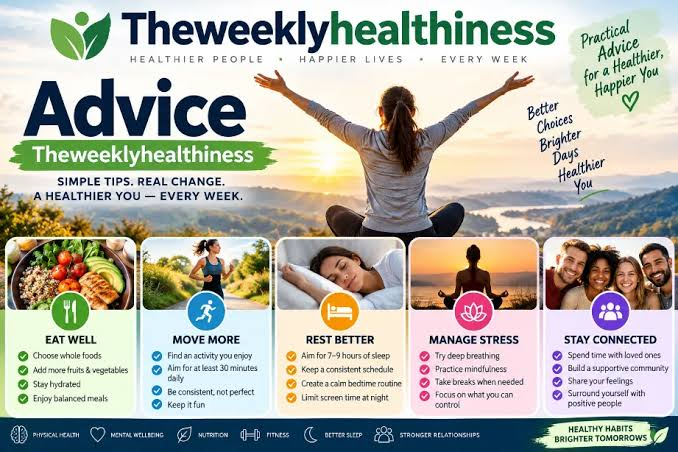
Advice Tips TheWeeklyHealthiness is a topic focused on practical health advice, everyday wellness, nutrition, exercise, and healthy lifestyle choices. Many people want to improve their well-being but struggle to find guidance that fits their busy schedules and everyday responsibilities. Simple health tips can help readers develop better routines without making their lives unnecessarily complicated.
The idea behind Advice Tips TheWeeklyHealthiness living is to make small, consistent improvements that support physical fitness, mental well-being, and overall quality of life. From drinking enough water and choosing balanced meals to improving sleep and managing stress, everyday decisions can contribute to long-term wellness. By understanding reliable health information and applying realistic advice, people can build habits that are easier to maintain.
Quick Facts About Advice Tips TheWeeklyHealthiness
| Quick Facts | Details |
|---|---|
| Main topic | Health and wellness advice |
| Primary focus | Healthy everyday habits |
| Related subjects | Nutrition, fitness, sleep, and self-care |
| Target audience | People interested in healthier living |
| Eating guidance | Balanced and varied nutrition |
| Fitness guidance | Regular physical activity |
| Mental wellness | Stress management and relaxation |
| Sleep | Consistent and sufficient rest |
| Health information | General educational guidance |
| Main objective | Supporting sustainable lifestyle improvements |
1. Understanding Advice Tips TheWeeklyHealthiness
Advice Tips TheWeeklyHealthiness is a search topic associated with practical wellness information and lifestyle improvement. People interested in this subject may be looking for easy ways to improve their eating habits, increase physical activity, manage daily stress, or establish healthier routines. Rather than concentrating on a single aspect of health, the topic covers several connected areas that influence everyday well-being. Advice Tips TheWeeklyHealthiness.
Readers should look for health information that is clear, realistic, and supported by reliable evidence. Online wellness articles can introduce useful ideas, but not every recommendation found on the internet is appropriate for everyone. Understanding the difference between general lifestyle advice and professional medical guidance helps readers make safer decisions. The most valuable health resources explain their recommendations carefully and avoid promising instant results or guaranteed cures. Advice Tips TheWeeklyHealthiness.

2. Why Healthy Lifestyle Advice Matters
Healthy lifestyle advice can help people make better decisions about their daily routines. Modern life often involves long working hours, irregular meals, limited physical activity, and considerable screen time. These habits can make it difficult to prioritize personal well-being. Practical guidance provides a starting point for identifying areas that may benefit from improvement and creating routines that fit individual circumstances. Advice Tips TheWeeklyHealthiness.
Developing healthier habits does not require changing everything overnight. Someone who rarely exercises might begin with short walks, while a person who frequently skips breakfast could plan a simple morning meal. Small changes can gradually become part of a regular routine when they are manageable and realistic. Consistency, flexibility, and patience are more useful than pursuing perfection or comparing personal progress with someone else’s results. Advice Tips TheWeeklyHealthiness.
3. Nutrition Tips for a Balanced Diet
A balanced diet provides the nutrients and energy needed to support everyday activities. A varied eating pattern can include vegetables, fruits, whole grains, beans, lentils, nuts, and suitable sources of protein. Depending on individual preferences and dietary needs, protein sources may include eggs, fish, poultry, dairy products, or plant-based alternatives. Eating different foods helps provide a broader range of nutrients than relying heavily on a limited selection. Advice Tips TheWeeklyHealthiness.
Practical nutrition advice also emphasizes moderation and meal planning. Preparing meals at home can make it easier to control ingredients and include a variety of nutritious foods. Reducing excessive consumption of sugary drinks, heavily processed snacks, and foods high in salt may also support better overall dietary habits. However, healthy eating does not mean avoiding every favorite food. A flexible approach that considers budget, culture, availability, and personal needs is generally easier to maintain over time. Advice Tips TheWeeklyHealthiness.
4. Exercise Tips for Everyday Fitness
Regular physical activity supports cardiovascular health, muscle strength, mobility, and general fitness. Exercise does not always require a gym membership or specialized equipment. Walking, cycling, dancing, gardening, and home-based exercises can all contribute to a more active lifestyle. Choosing enjoyable activities can make it easier to remain consistent, especially for people who are new to exercise or have limited free time. Advice Tips TheWeeklyHealthiness.
Beginners should start at a comfortable level and increase activity gradually. Short sessions spread throughout the week can be a practical alternative to demanding workouts. Adults are generally encouraged to work toward at least 150 minutes of moderate-intensity aerobic activity each week, alongside muscle-strengthening activities on two or more days, when appropriate for their abilities. People with medical conditions, significant pain, or other physical limitations should seek suitable professional guidance before making substantial changes to their exercise routine. Advice Tips TheWeeklyHealthiness.
5. The Importance of Drinking Enough Water
Water helps regulate body temperature, transport nutrients, support digestion, and maintain normal bodily functions. Fluid requirements vary according to activity levels, climate, body size, diet, and individual health circumstances. People living in hot climates or spending considerable time outdoors may need to pay particular attention to fluid intake, especially during physically demanding activities. Advice Tips TheWeeklyHealthiness.
Keeping drinking water accessible can make hydration easier throughout the day. Drinking regularly with meals and during breaks is a simple habit for many people. Water is often a good everyday choice, while foods such as fruit and vegetables also contribute to fluid intake. Individual needs may differ, particularly for people who have been advised to Advice Tips TheWeeklyHealthiness.
6. Better Sleep Habits for Overall Wellness
Sleep is an essential part of maintaining physical health, concentration, and emotional balance. During sleep, the body carries out important processes that support recovery, memory, and normal functioning. Adults generally need at least seven hours of sleep per night, although individual requirements can vary. Regularly getting insufficient sleep may contribute to tiredness, difficulty concentrating, irritability, and reduced productivity during the day. Advice Tips TheWeeklyHealthiness.
Developing a consistent bedtime routine can make it easier to get sufficient rest. Going to bed and waking up at similar times each day helps establish a regular sleep schedule. Keeping the bedroom quiet, dark, and comfortable may also improve sleep quality. Limiting caffeine late in the day, avoiding heavy meals immediately before bedtime, and reducing stimulating screen activities in the evening can be helpful. Persistent sleep difficulties should be discussed with a qualified healthcare professional. Advice Tips TheWeeklyHealthiness.
7. Managing Stress and Supporting Mental Health
Mental well-being is an important part of a healthy lifestyle. Work responsibilities, financial pressures, family concerns, and everyday uncertainty can contribute to stress. Although some stress is a normal response to challenging situations, ongoing stress can affect sleep, concentration, relationships, and daily routines. Recognizing personal stress triggers can help individuals identify practical ways to manage difficult periods. Advice Tips TheWeeklyHealthiness.
Relaxation techniques, gentle exercise, breathing exercises, journaling, and spending time with supportive friends or family members may help reduce everyday stress. Taking short breaks and setting realistic priorities can also make responsibilities feel more manageable. People should remember that mental health is not simply a matter of positive thinking. When emotional difficulties persist or interfere with daily life, seeking help from a qualified mental health professional is a sensible step.
8. Personal Hygiene and Daily Self-Care
Personal hygiene is another important element of everyday health. Regular handwashing, dental care, bathing when needed, and keeping clothing clean can help reduce exposure to germs and support personal comfort. Washing hands with soap and water at appropriate times, particularly before eating and after using the toilet, is a simple habit that helps reduce the spread of many infections.
Self-care also includes paying attention to physical comfort, taking breaks, and maintaining a living environment that supports well-being. Cleaning frequently touched surfaces, handling food safely, and storing food at appropriate temperatures can contribute to a healthier home. Personal care routines should remain practical and suitable for individual needs rather than becoming unnecessarily expensive or complicated. Simple, consistent practices often provide more value than purchasing numerous products marketed as essential wellness solutions.
9. Common Health Mistakes to Avoid
One common mistake is believing that a single food, supplement, or exercise routine can solve every health problem. Health depends on many interacting factors, including nutrition, activity, sleep, genetics, environment, and access to medical care. Products advertised as miracle solutions may make exaggerated promises without strong scientific evidence. Before using supplements, particularly alongside prescription medicines, people should consider possible interactions and seek advice from a qualified healthcare professional when appropriate.
Another mistake is following restrictive diets or demanding exercise plans without considering personal circumstances. Extreme approaches can be difficult to maintain and may not provide the nutrients or recovery the body needs. Ignoring persistent symptoms or replacing prescribed treatment with online remedies can also create unnecessary risks. Reliable wellness advice should encourage realistic goals, responsible decision-making, and appropriate medical care rather than fear, guilt, or unrealistic expectations.
10. Building a Sustainable Healthy Lifestyle
Building a sustainable healthy lifestyle starts with understanding personal needs and choosing habits that fit everyday life. Someone with a busy schedule might prepare meals in advance, walk during breaks, or establish a regular bedtime. Another person may benefit from planning grocery shopping, reducing prolonged sitting, or making more time for relaxation. There is no single routine that works perfectly for everyone, so flexibility is an important part of lasting improvement.
Tracking small achievements can help people recognize progress and maintain motivation. Simple changes, such as walking more frequently, eating vegetables with meals, or following a consistent sleep schedule, can provide a foundation for healthier routines. When a habit becomes manageable, another improvement can be introduced gradually. The goal is not to follow a perfect lifestyle every day but to develop a balanced approach that supports physical health, emotional well-being, and everyday responsibilities.

Conclusion
Advice Tips TheWeeklyHealthiness highlights the importance of practical, everyday decisions in maintaining a healthier lifestyle. Balanced nutrition, regular exercise, sufficient sleep, appropriate hydration, personal hygiene, and stress management all contribute to overall well-being. These habits do not need to be expensive or complicated to become useful parts of daily life.
The best approach is to start with manageable changes, remain consistent, and choose reliable sources of health information. Everyone has different needs, circumstances, and limitations, so wellness routines should be adapted accordingly. By focusing on sustainable habits instead of quick fixes, individuals can make more informed decisions and work toward a healthier, more balanced lifestyle.
