



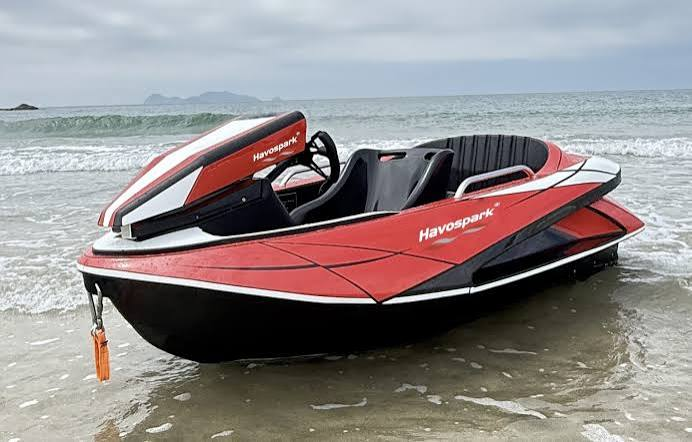
A mini electric jet boat is an exciting modern watercraft that combines compact design, electric power, and jet propulsion to create a thrilling experience on the water. Unlike traditional petrol-powered boats, an electric mini jet boat uses a rechargeable battery and an electric motor to deliver performance without the direct exhaust emissions associated with combustion engines. Its small size, sporty appearance, and straightforward controls make it an interesting option for recreational boating and water sports enthusiasts.
The Mini Electric Jet Boat featuring a 15kW motor and a 72V lithium battery is designed for people who want speed, maneuverability, and a different way to enjoy lakes and other suitable waterways. The model listed by Mr Boats advertises a maximum speed of approximately 52 km/h and a peak operating time of around 70–80 minutes, depending on conditions. Its compact construction and removable battery also make it an appealing alternative to larger recreational watercraft.
Mini Electric Jet Boat Quick Facts
Product Overview
Product Name
Mini Electric Jet Boat
Motor Power
15 kW
Battery Voltage
72V
Battery Capacity
5.1 kWh
Advertised Maximum Speed
Up to 52 km/h
Peak Operating Time
70–80 minutes
Charging Time
Approximately 3–4 hours
Maximum Load
130 kg
Net Weight With Battery
Approximately 71 kg
Hull Material
ABS, PC, and EPP
Brand Listed
Parsun
Warranty Listed
12 months
Specifications are based on the advertised model. Actual performance depends on operating conditions, rider weight, battery condition, and configuration.
What Is a Mini Electric Jet Boat?
A mini electric jet boat is a compact recreational watercraft that uses an electric motor to power a water jet system. Instead of relying on a conventional petrol engine, it draws energy from a rechargeable battery. The motor drives an internal impeller that moves water through a propulsion system, generating thrust that pushes the boat forward. This arrangement gives the craft its distinctive jet-powered operation and sporty riding experience. mini electric jet boat.
The compact design makes this type of boat different from traditional motorboats used for fishing, transportation, or carrying several passengers. Many mini jet boats are designed primarily for one rider, with a bucket seat, steering wheel, and controls that resemble those found in a small go-kart. The result is a watercraft that emphasizes individual recreation, quick handling, and an engaging connection with the water. However, the precise handling characteristics depend on the hull shape, jet system, and water conditions. mini electric jet boat.
The 15kW mini electric jet boat is an example of how electric propulsion is being applied to recreational water sports. Its combination of a 72V battery, compact hull, and high-power motor provides a different experience from a slow electric dinghy. Although it is small, it should still be treated as a powerful watercraft rather than a simple floating toy. Riders need suitable training, safety equipment, and an understanding of local boating requirements before using it. mini electric jet boat.
Motor Power and Speed Performance
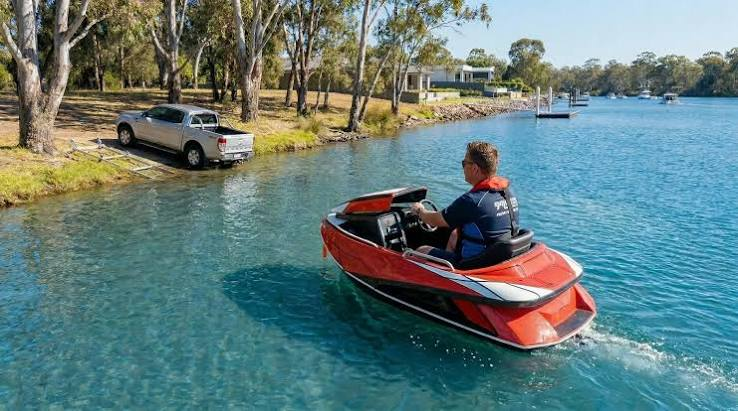
Motor power is one of the most important specifications to consider when choosing an electric jet boat. The advertised 15kW motor provides the energy needed to operate the jet propulsion system and deliver acceleration on the water. For a compact recreational craft, this power level is intended to offer a balance between responsiveness and manageable size. The actual performance depends on how efficiently the motor, controller, battery, and water jet work together. mini electric jet boat.
The advertised maximum speed of approximately 52 km/h makes this mini electric jet boat an interesting choice for people who enjoy fast-paced water activities. However, the top speed should not be considered a guaranteed result in every situation. Rider weight, battery charge, wind, water currents, and hull condition can all influence the speed a boat achieves. Operating in rough water may also require a slower pace to maintain control and reduce the risk of an accident. mini electric jet boat.
Some models provide high-speed and low-speed modes, along with reverse functionality. These controls can help riders adjust the boat’s response to different situations, such as maneuvering near a launch area or moving at a more controlled pace. Reverse can also assist with certain low-speed movements, depending on the propulsion system’s design. Riders should learn how these features work before entering busy waterways and should never assume that reverse provides the same stopping ability as a conventional vehicle. mini electric jet boat.
72V Lithium Battery and Charging System
The battery is central to the performance of a mini electric jet boat because it supplies the electricity required by the motor. The advertised model uses a 72V lithium battery with a stated capacity of approximately 5.1kWh. This combination is intended to provide substantial power in a compact package. Lithium battery technology is popular in electric vehicles because it offers useful energy storage without the weight associated with some older battery types. mini electric jet boat.
Charging time is another important consideration for prospective buyers. The listed model advertises a charging period of approximately three to four hours, although the exact time can depend on the charger, battery temperature, starting charge level, and electrical supply. Owners should use the manufacturer’s specified charging equipment and follow the supplied instructions. The charger and electrical connection must also be appropriate for the country where the boat will be used. mini electric jet boat.
The battery is advertised as removable, which may simplify charging, maintenance, and storage. A removable battery can be especially useful for owners who cannot conveniently bring the entire boat close to an electrical outlet. However, the battery is still a substantial electrical component and must be handled carefully. It should be kept away from water during charging, protected from physical damage, and inspected for signs of overheating or swelling. Owners should also understand that battery capacity and operating time can gradually decrease with age and repeated charging cycles. mini electric jet boat.
Design, Construction, and Portability
The compact construction of a mini electric jet boat is one of its most attractive qualities. The advertised model uses a shell made from ABS, PC, and EPP materials, combining different plastics and foam-based material in a lightweight structure. These materials can help reduce overall weight while providing a practical hull design for recreational use. The quality of construction, protective coatings, seals, and internal components remains important because the craft must operate in a wet environment. mini electric jet boat.
The listed boat measures approximately 1,850 mm in length, 860 mm in width, and 550 mm in height. Its compact dimensions make it smaller than many conventional recreational boats and can simplify storage when suitable space is available. The listed net weight with the battery is approximately 71 kg, although lifting and transporting the craft still require care. Owners should check the manufacturer’s instructions before moving it, particularly when removing or reinstalling the battery. mini electric jet boat.
Appearance is another part of the appeal. A sporty steering wheel, bucket seat, imitation wood-style floor, and finished exterior give the boat a distinctive recreational design. These features can make it feel more like a small personal performance vehicle than a traditional boat. Nevertheless, appearance should not be the main purchasing consideration. Hull integrity, water sealing, propulsion reliability, spare-parts availability, and access to qualified service are more important for long-term ownership.
Main Features and Practical Benefits
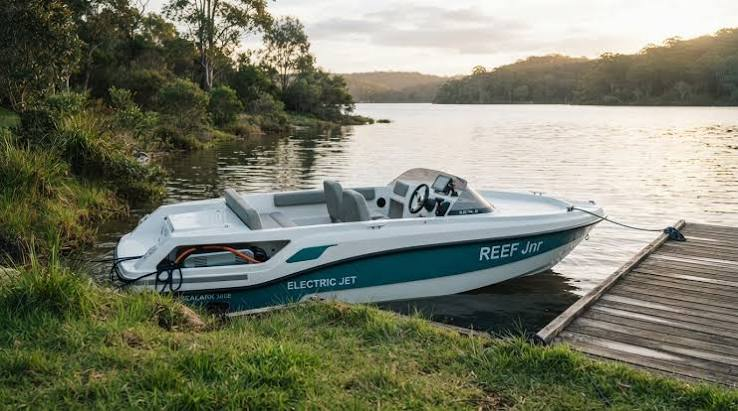
One of the key benefits of electric propulsion is the absence of direct exhaust emissions from the boat while operating. An electric motor also avoids some of the routine maintenance associated with petrol engines, including engine oil changes and fuel-system servicing. Electric operation can make the craft more convenient for owners who prefer charging instead of purchasing and carrying petrol. However, battery care, electrical inspections, jet-system cleaning, and other maintenance tasks are still necessary.
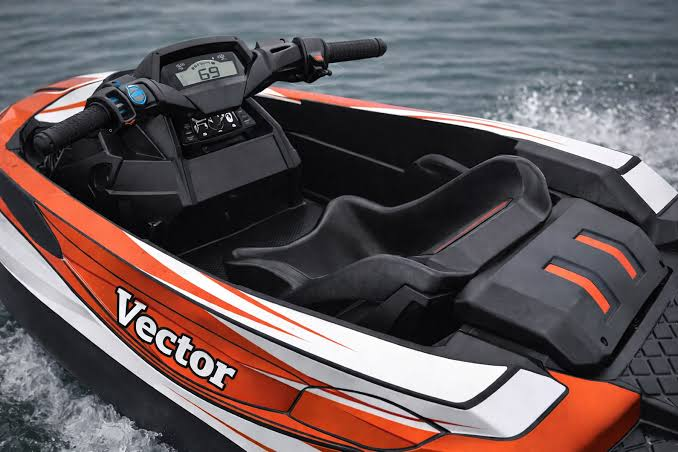
Another advantage is the compact and relatively simple control layout. A steering wheel, speed controls, and high- or low-speed settings can make the craft approachable for people who are new to this style of water sport. The advertised reverse function may also provide useful maneuvering assistance. Even so, ease of operation should not be confused with guaranteed safety. First-time riders should receive appropriate instruction and practice in a controlled environment before attempting faster riding.
The boat may also appeal to people looking for a distinctive recreational activity at a private waterfront property, approved boating area, or water-sports facility. Its small footprint can make it easier to store than a large recreational vessel, while its electric drive may reduce some operating inconveniences. Whether it is suitable for a particular location depends on water depth, launch access, local regulations, and the manufacturer’s requirements. It is not automatically suitable for every lake, river, or coastal area.
Expected Runtime, Maintenance, and Battery Life
Operating time is a major factor when deciding whether an electric boat meets your needs. The advertised model lists a peak operating time of approximately 70–80 minutes. This figure should be understood as a product claim rather than a guaranteed duration for every trip. Continuous high-speed riding generally consumes energy faster than lower-speed operation, while carrying a heavier rider or traveling against a current may also affect the amount of time available.
A practical owner should plan each outing with a reasonable battery reserve rather than using the entire advertised runtime as a target. Checking the battery charge before departure, understanding the return route, and avoiding isolated areas can help reduce the risk of becoming stranded. Weather and water conditions should also be considered before launching. If the battery indicator or motor begins behaving unexpectedly, the rider should follow the manufacturer’s procedures and return to a safe location when possible.
Battery lifespan is usually expressed in charge cycles, but the meaning of a cycle and the conditions used to measure it can vary. The listed boat advertises approximately 800 charge-discharge cycles. This number does not mean that the battery will necessarily perform like new for 800 cycles or fail immediately afterward. Temperature, charging habits, storage conditions, discharge depth, and overall battery quality influence long-term performance. Regularly inspecting the hull, electrical connections, cooling system, and jet intake can also help maintain reliability.
Safety Considerations and Suitable Water Conditions
Safety should be a priority when operating a fast electric mini jet boat. Even a compact craft can reach speeds that make collisions and sudden changes in direction dangerous. Riders should wear an appropriate, properly fitted personal flotation device and follow all local boating regulations. A helmet or other protective equipment may also be appropriate depending on the riding environment and applicable rules. Beginners should receive instruction and practice at a controlled speed before attempting more demanding maneuvers.
Water conditions deserve particular attention. Shallow areas, floating vegetation, rocks, debris, and submerged obstacles can interfere with the jet intake or damage the hull. Although jet propulsion does not use a conventional exposed propeller in the same way as many boats, this does not make the craft completely risk-free. The jet intake and other moving components can still present hazards. Riders should keep clear of the propulsion opening and follow the manufacturer’s maintenance and inspection guidance.
The advertised maximum load is approximately 130 kg, and this limit should never be exceeded. The maximum load figure must be interpreted according to the manufacturer’s instructions and may include the rider and any carried equipment. Owners should also verify whether the model is approved for their intended waterway and whether registration, licensing, age restrictions, or other requirements apply. Weather forecasts, emergency communication, and a suitable recovery plan are important parts of responsible boating.
Is a Mini Electric Jet Boat Worth Buying?
Whether this watercraft is worth buying depends on how you intend to use it. For someone who wants a compact, single-rider recreational boat with electric propulsion, the combination of a 15kW motor, 72V battery, and advertised speed of up to 52 km/h may be appealing. It offers a different experience from a conventional electric fishing boat because its design focuses on sporty handling and recreational performance rather than carrying passengers or equipment.
The purchase price is only one part of the total cost of ownership. Buyers should consider shipping, import duties, local taxes, charging arrangements, storage, safety equipment, spare parts, battery replacement, and servicing. These expenses can be particularly important when ordering a watercraft from another country. Before purchasing, ask the seller for the final delivered price, a written warranty, battery replacement costs, service arrangements, and confirmation of the exact model being supplied.
It is also sensible to confirm that the advertised specifications match the boat you will receive. Ask whether the quoted runtime is measured at full speed or under mixed operating conditions, what the warranty covers, and how the battery is tested. Check the availability of replacement components and whether local technicians can service the electrical and jet propulsion systems. A boat with reliable after-sales support may offer better long-term value than a cheaper alternative with limited parts availability.
Conclusion
The mini electric jet boat is an interesting development in personal watercraft, combining battery-powered propulsion, compact dimensions, and sporty performance. The advertised 15kW motor and 72V lithium battery give the featured model a strong specification for recreational use, while its removable battery, compact hull, and selectable speed modes offer practical benefits for owners who want a different kind of boating experience.
Its advertised maximum speed of approximately 52 km/h and peak runtime of 70–80 minutes are attractive features, but actual performance will vary with operating conditions. Charging requirements, battery maintenance, safe water access, and local boating regulations should all be considered before purchasing. Buyers should also confirm the final price, warranty terms, and availability of replacement parts.
Overall, a mini electric jet boat may be a suitable option for recreational riders who value compact design and electric power. Choosing the right model requires more than comparing speed figures. Understanding its limitations, maintaining the battery correctly, and following responsible boating practices will help owners make a more informed decision and enjoy their time on the water safely.
