



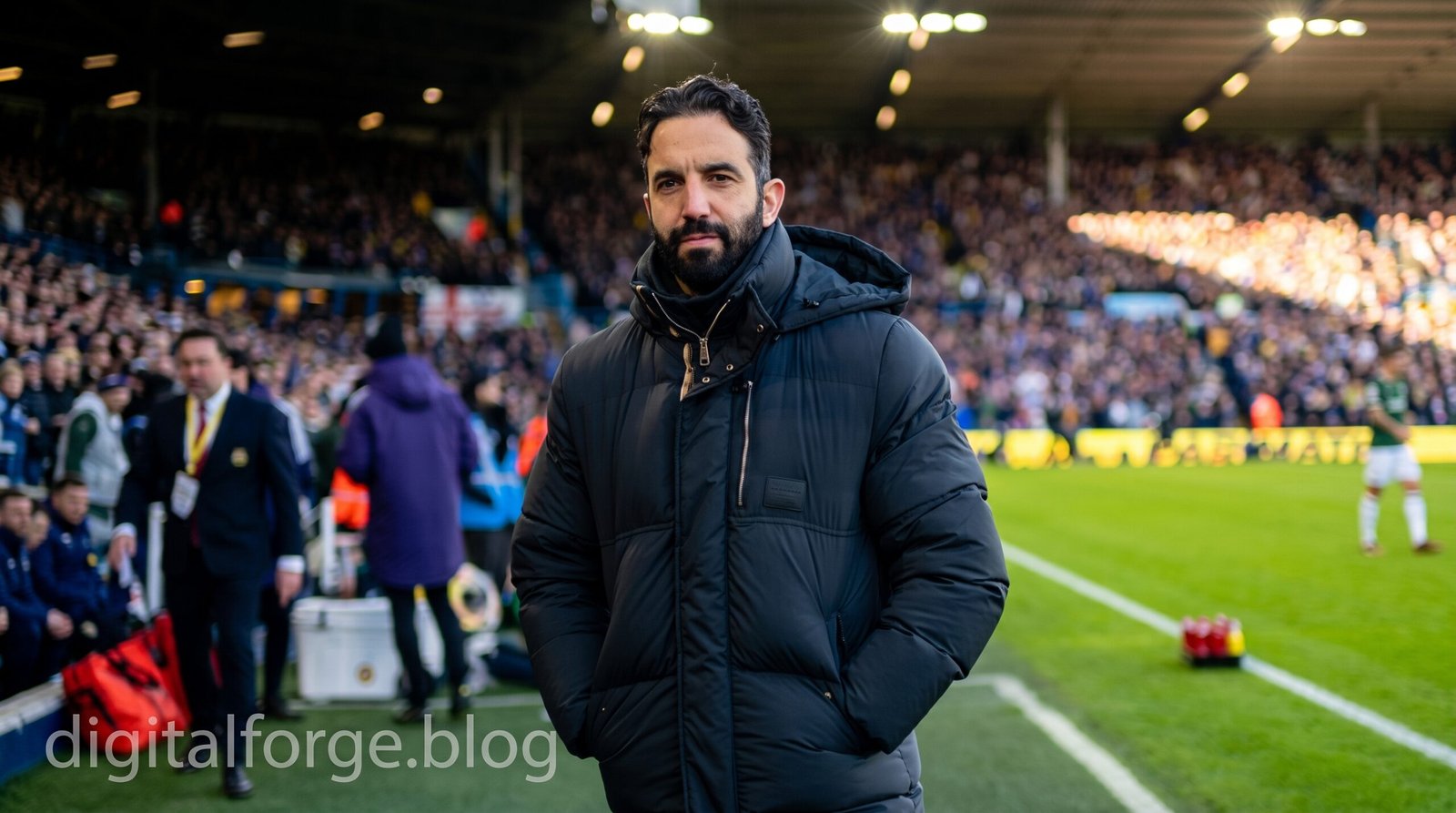
Rúben Amorim has become one of the most recognizable Portuguese football coaches of his generation. From his playing days with Benfica and Portugal to his breakthrough at Sporting CP, his difficult experience with Manchester United and his new challenge at AC Milan, Amorim’s career has developed through several very different stages. His rise has been driven by tactical ideas, strong player development and an unmistakable commitment to attacking football.
As of 2026, Amorim is once again managing at the highest level after AC Milan appointed him as their head coach in June. His arrival in Serie A represents another major opportunity to demonstrate that the methods that made him successful in Portugal can work in a different football culture. His story is therefore not simply about trophies or famous clubs; it is also about how a former midfielder developed into a modern coach with a distinctive football philosophy.
Who Is Rúben Amorim?
Rúben Amorim is a Portuguese football manager and former professional midfielder who was born in Lisbon in 1985. Before entering management, he built a respected playing career in Portugal, particularly with Belenenses and Benfica. He also represented Braga, played abroad for Al-Wakrah and earned international caps for Portugal, including appearances at the 2010 and 2014 FIFA World Cups. He retired from professional football in 2017 at the age of 32.
Amorim’s experience as a midfielder has influenced the way he approaches coaching. Rather than viewing tactics only as formations on paper, he places considerable importance on relationships between players, positioning and creating passing options. His coaching career began in 2018 with Casa Pia before he moved into Braga’s structure and eventually took charge of the senior team. His rapid progress demonstrated that he possessed the organizational and leadership qualities needed to manage at the highest level.
Rúben Amorim’s Playing Career and Early Football Background
Amorim developed as a footballer in Portugal and made his Primeira Liga debut with Belenenses in 2003. He later joined Benfica, where he became part of a highly successful team. At Benfica, he won multiple domestic trophies, including three Portuguese league titles, a Portuguese Cup, five League Cups and a Portuguese Super Cup. These experiences exposed him to the pressure of competing for trophies and helped provide the foundation for his later coaching career.
His time as a player also gave him an understanding of different tactical demands and dressing-room environments. Amorim was not known primarily as a superstar, but he was regarded as a technically intelligent and versatile midfielder. That background later became important because his coaching philosophy emphasizes players understanding their responsibilities within a larger collective structure. His transition from player to coach was relatively quick, beginning only a year after his retirement.
How Rúben Amorim Became a Successful Manager
Amorim’s first coaching opportunity came at Casa Pia in 2018. He subsequently worked with Braga B before being promoted to Braga’s senior team in late 2019. His spell at Braga was extremely short but highly influential. He quickly produced impressive results and won the Portuguese League Cup in January 2020 after Braga defeated Porto in the final. That success made him one of the most talked-about young managers in Portuguese football.
Sporting CP moved quickly to appoint Amorim in March 2020. The decision initially represented a major investment in a coach with relatively little senior management experience, but it soon proved successful. In his first full season, Amorim guided Sporting to the Primeira Liga title, ending the club’s 19-year wait for a league championship. He also helped Sporting develop a recognizable playing identity based on tactical organization, aggressive pressing, wing-back involvement and rapid attacking transitions.
Rúben Amorim’s Sporting CP Achievements
Sporting CP became the defining chapter of Amorim’s managerial career before his move to England. His first league title in 2020–21 was particularly important because Sporting had not won the Portuguese championship since 2002. Amorim created a disciplined and competitive squad while also giving opportunities to young players, helping the club establish a sustainable footballing model rather than relying only on expensive signings.
His success continued over the following seasons. Amorim won two Portuguese league titles with Sporting, along with two Portuguese League Cups and a Portuguese Super Cup. The second league championship came in the 2023–24 campaign and reinforced his reputation as one of Europe’s most promising young managers. AC Milan’s official announcement later highlighted Sporting’s strong playing identity, innovation and player development as important reasons for Amorim’s growing reputation.
Rúben Amorim’s Tactical Philosophy Explained
The tactical system most closely associated with Amorim is the 3-4-3 or 3-4-2-1. His teams normally use three central defenders, two wing-backs, two central midfielders and attacking players positioned behind a central striker. The formation is designed to create numerical advantages during build-up while allowing the wing-backs to provide width. When the team attacks, the structure can become highly fluid as players rotate between central and wide positions.
Amorim’s football is not based on possession simply for the sake of controlling the ball. His teams generally attempt to attract opponents forward before attacking the spaces created behind them. Quick vertical passes, coordinated pressing and rapid transitions are important elements of his approach. Without possession, his teams aim to remain compact and aggressive, often using pressing triggers to force opponents toward specific areas of the pitch. This combination of structure and intensity has become one of his managerial trademarks.
Rúben Amorim at Manchester United
Manchester United appointed Amorim in November 2024 after his highly successful period at Sporting CP. Expectations were enormous because he arrived at Old Trafford with the reputation of being one of Europe’s most exciting young coaches. He attempted to introduce his preferred three-man defensive system relatively quickly, but adapting an existing squad to a different tactical structure proved difficult. His time in England ultimately lasted around 14 months.
The Manchester United period was the most challenging part of Amorim’s managerial career. United experienced inconsistent performances and struggled to maintain the collective pressing and defensive organization required by his system. His 2024–25 campaign ended with United finishing 15th in the Premier League, while the team also reached the Europa League final. Amorim was dismissed in January 2026 after 63 games in charge.
Why Rúben Amorim’s Manchester United Spell Was Difficult
One of the central issues surrounding Amorim at Manchester United was the contrast between his tactical preferences and the characteristics of the squad he inherited. His Sporting teams had been carefully developed around his system, while at United he inherited players recruited under different managers with different tactical requirements. The three-man defense, wing-back responsibilities and demands placed on the central midfield positions required significant adaptation from the squad.
The experience also exposed some weaknesses in Amorim’s approach. His reluctance to abandon the core principles of his 3-4-3 system became a frequent subject of debate, particularly when results deteriorated. Nevertheless, his Manchester United period should be viewed within the broader context of his career rather than as proof that his tactical philosophy does not work. His earlier achievements at Sporting remain significant, while his time in England provided valuable experience of managing expectations, squad construction and pressure at an elite global club.
Rúben Amorim’s New Chapter at AC Milan
AC Milan appointed Amorim as head coach in June 2026, giving him a three-year contract and an opportunity to rebuild his reputation after leaving Manchester United. The club’s leadership specifically pointed to his high-pressing attacking football, quick transitions, modern tactical approach and ability to develop players. Amorim described managing Milan as a career ambition and emphasized the club’s history, prestige and worldwide fanbase.
His early weeks in Serie A have already generated attention. Amorim has continued to use a back-three system, with Milan operating around the principles associated with his 3-4-2-1 formation. By the end of August 2026, Milan had started the Serie A season with consecutive victories, including a 2–0 win over Venezia. Despite the positive results, Amorim remained demanding about defensive performances, criticizing aspects of the team’s organization even after keeping a clean sheet.
Rúben Amorim’s Legacy and Future in Football
Amorim’s career already contains enough achievements to make him an important figure in modern Portuguese football. His Sporting teams ended a long league-title drought, won multiple domestic trophies and developed young players within a clearly defined tactical structure. His success also demonstrated how a relatively young coach can establish a strong identity when a club gives him the authority and time to build a team around his ideas.
The AC Milan project could ultimately determine how Amorim’s career is remembered internationally. If he succeeds in Italy, his reputation may become defined less by his difficult Manchester United spell and more by his ability to adapt his principles across different leagues and football cultures. His tactical identity remains clear, but the biggest question is how effectively he can combine that identity with flexibility. At Milan, Amorim has another opportunity to show why he was once considered one of Europe’s most exciting coaching prospects.
Conclusion
Rúben Amorim’s journey from Portuguese midfielder to elite football manager has been marked by rapid progress, major trophies, tactical innovation and significant challenges. His achievements at Sporting CP established him as a coach capable of building a successful team around a clear football philosophy, while his Manchester United experience demonstrated the difficulties that can arise when a coach attempts to implement a new system at a club under intense pressure.
Now at AC Milan, Amorim has entered another important stage of his career. His three-man defensive structure, aggressive pressing, quick transitions and commitment to player development are once again being tested at a historic European club. The early results have provided encouragement, but the long-term success of the project will depend on his ability to combine his established principles with the demands of Serie A. Whatever happens next, Rúben Amorim remains one of the most interesting modern coaches to follow, and his evolution at Milan could become one of the defining stories of European football in the coming years.
